If you've spent any time in the business funding industry, you've heard the term Merchant Cash Advance (MCA).
Here's the reality:
Merchant cash advances account for roughly 70% of the alternative business funding market.
That tells us two things.
First, business owners need access to capital quickly.
Second, traditional banks are not meeting that demand.
Merchant cash advances exist because they solve a problem: speed. In many cases, funding can happen within 24 to 72 hours. When payroll is due, inventory needs to be purchased, or an unexpected expense threatens operations, speed matters.
But just because something is fast doesn't automatically make it the best solution.
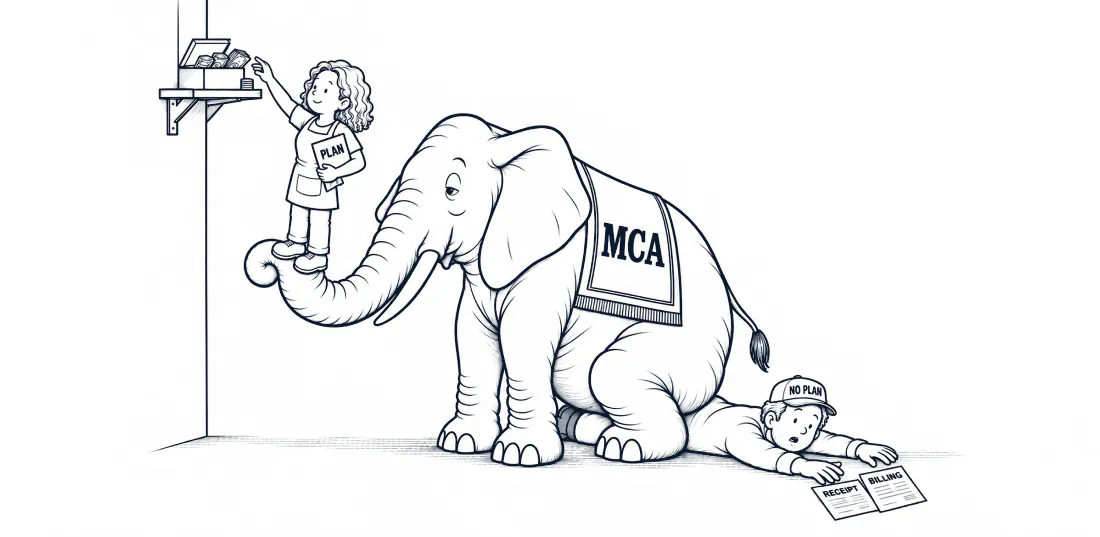
Merchant Cash Advances Are a Tool, Not a Strategy
One of the biggest misconceptions we see is merchants treating an MCA as the solution.
It isn't. It's simply one financial tool. Like any tool, it can either build your business or damage it, depending on how it's used.
At Fugio Funding Network, we believe every funding decision should begin with one simple question:
"What is this money going to accomplish?"
Let's Talk About ROAS
One conversation my business partner Nick and I have almost every day revolves around one metric:
ROAS, or return on ad spend.
Although the term originated in marketing, the concept applies to every dollar a business borrows.
Ask yourself:
How much additional revenue will this money generate?
Will it create enough profit to comfortably repay the advance?
Does it solve a temporary cash flow issue or create a long-term one?
What is the true cost of borrowing compared to the return I'm expecting?
If you're borrowing $10,000 and that capital helps generate $50,000 in profitable revenue, paying a premium for quick access to money may make perfect business sense.
If you're borrowing simply to survive another month without a plan to increase revenue, that's a very different conversation.
Understanding Factor Rates
Merchant cash advances don't use traditional interest rates.
Instead, they use what's called a factor rate.
For example:
Advance Amount: $10,000
Factor Rate: 1.50
Total Repayment: $15,000
That means the merchant repays:
$10,000 × 1.50 = $15,000
If repayment occurs over 100 business days, the payment would be approximately:
$150 per business day
Unlike many traditional loans, payments are often withdrawn automatically through daily ACH debits.
Factor rates today generally range from approximately:
1.12 on the strongest files
1.59 (or higher) on riskier transactions
The higher the perceived risk, the higher the factor rate generally becomes.
Why Do So Many Businesses End Up With Merchant Cash Advances?
Because they often don't qualify for traditional financing.
Common characteristics include:
Less than two years in business
Limited business credit history
Personal credit scores between 500 and 640
Limited profitability
No business tax returns showing sufficient income
Need for immediate funding
Traditional banks generally require:
Strong personal credit
Consistent profitability
Multiple years of tax returns
Lower debt ratios
Many business owners simply aren't there yet. That doesn't mean they're bad businesses. It simply means they're earlier in their business journey.
The Hidden Danger
The danger isn't necessarily the merchant cash advance itself.
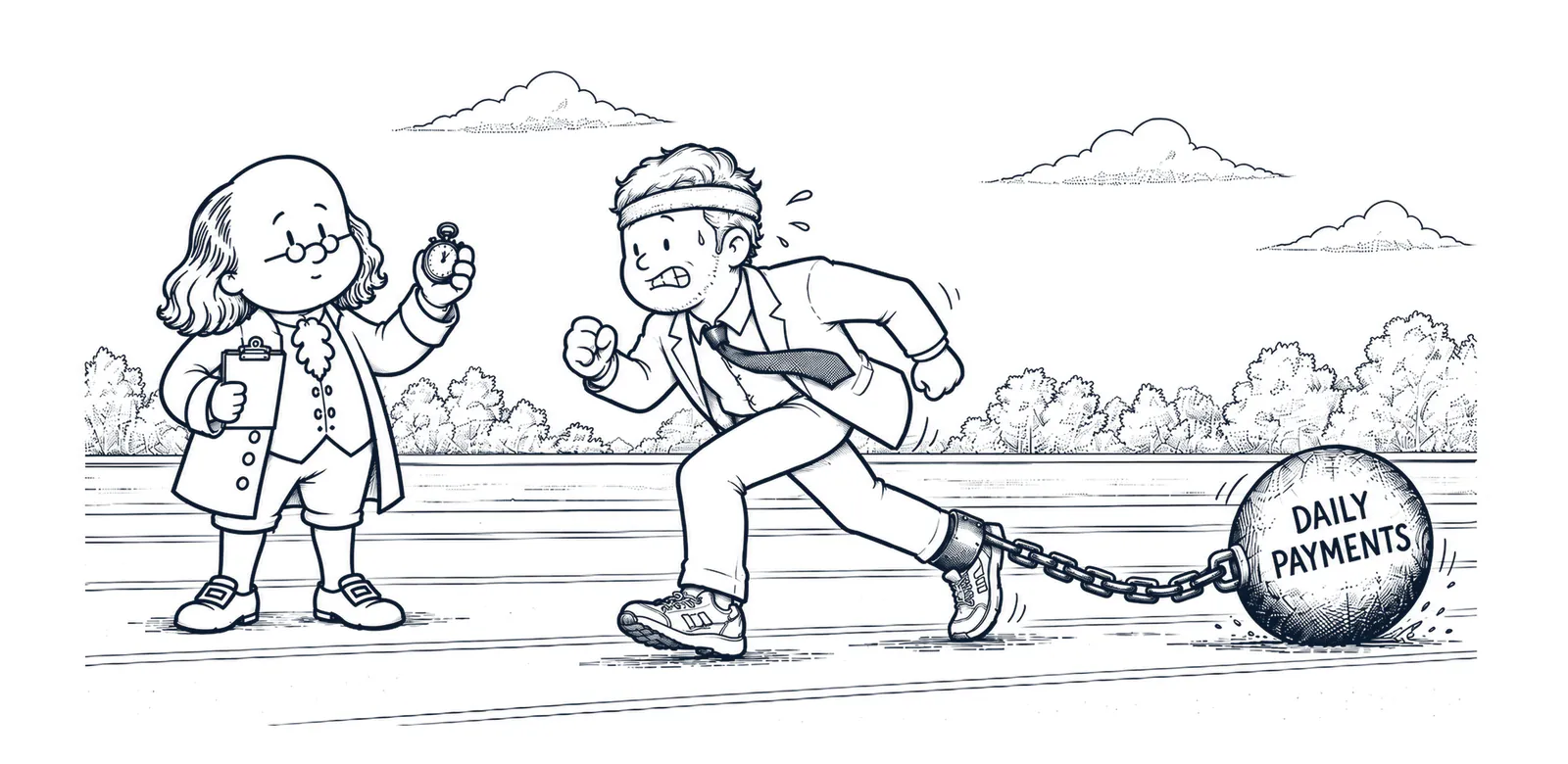
The danger is what happens afterward. Daily or weekly ACH payments begin almost immediately.
Many business owners suddenly find themselves operating with significantly less available cash every day.
Without increased revenue, improved margins, or a clear repayment strategy, they can find themselves on what many in the industry call the MCA treadmill, taking one advance to pay another.
That's where businesses begin to struggle.
Some MCA Companies Offer Early Payoff Discounts
This is something many merchants don't realize.
Certain MCA providers reward businesses that repay early.
If you're using the advance as a true bridge loan, for example while waiting on receivables or completing a high-return project, an early payoff can significantly reduce your effective borrowing cost.
Every agreement is different, and merchants should carefully review their contracts to understand whether early payoff incentives apply.
Our Philosophy at Fugio Funding Network
At Fugio Funding Network, we don't simply ask:
"How much money do you need?"
We ask:
Why do you need it?
How will you use it?
What does success look like after funding?
How do we help position your business for better financing in the future?
Every client receives what we call a Funding Action Plan. That means we're looking beyond today's approval. We're looking at where your business is today and where it needs to be six months, twelve months, and two years from now.
Sometimes that means an MCA is absolutely the right solution. Sometimes it isn't.
Sometimes it's simply the first step toward transitioning into:
Lower-cost working capital
Business lines of credit
Bank term loans
SBA financing
Equipment financing
Business credit programs
Our goal is to help businesses improve their financing options over time, not keep them dependent on expensive capital.
There Are No Guarantees
Every business is different. Every lender has different underwriting guidelines. Every funding decision depends on the individual circumstances of the business. We never guarantee approvals or future funding.
What we do promise is honest guidance, transparent communication, and a commitment to helping business owners understand every available option before making a financing decision.
Final Thoughts
Merchant cash advances aren't good. Merchant cash advances aren't bad. They're simply one tool in today's funding marketplace.
Used strategically, they can help a business seize opportunities and generate meaningful growth. Used without a plan, they can create financial pressure that becomes difficult to overcome.
Our responsibility at Fugio Funding Network is to help business owners understand the difference.
Because funding isn't just about getting money. It's about putting your business in the strongest possible financial position for the future.