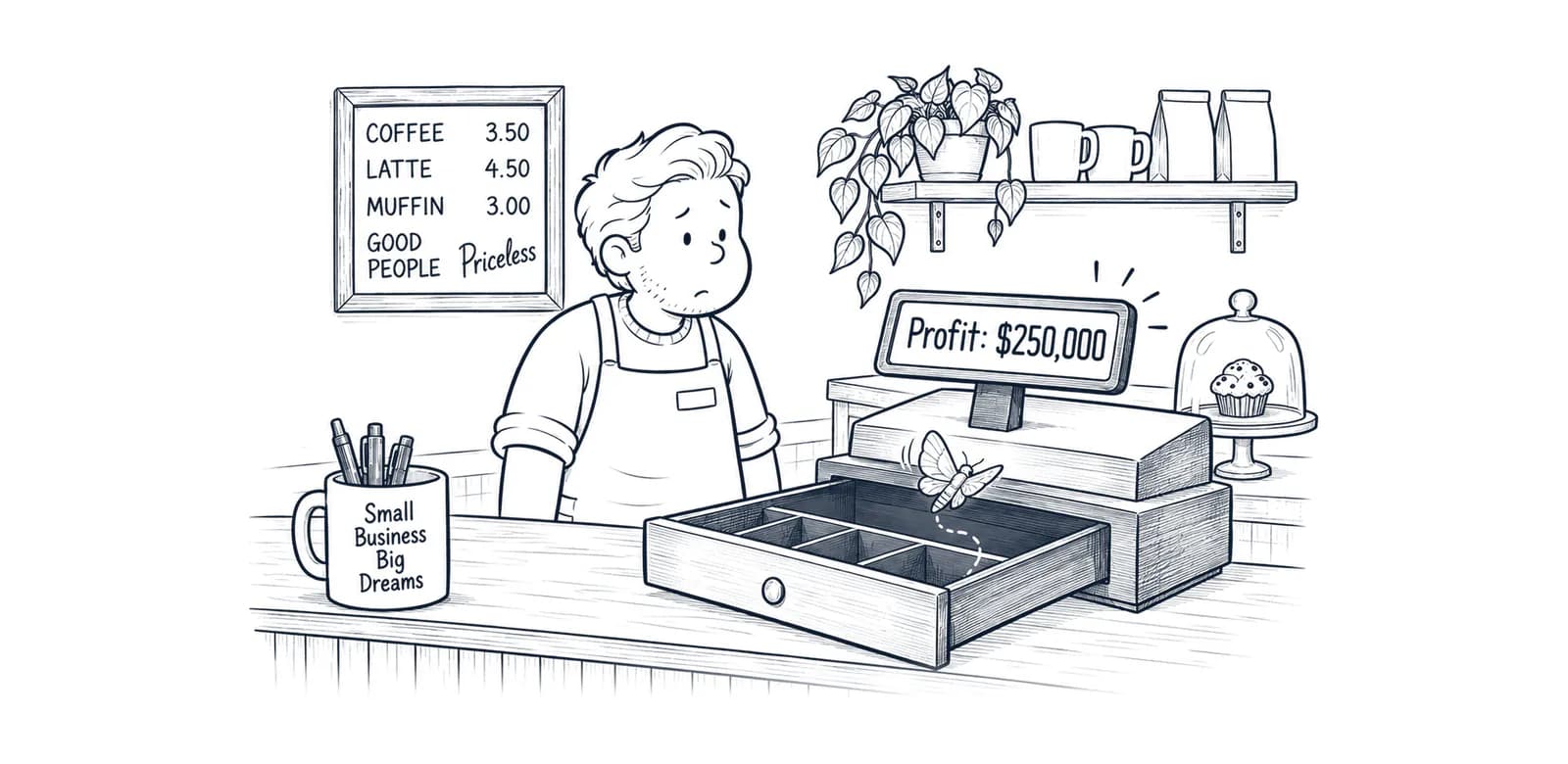
A business can be profitable on paper and still struggle to make payroll.
That sounds contradictory, but it happens every day. Revenue, profit, and available cash are not the same thing, and confusing them can leave an otherwise healthy company searching for expensive capital at exactly the wrong moment.
I once worked with an accountant who ran a successful and profitable practice. Over the course of the year, the business produced strong results. But like many accounting firms, a large portion of its revenue arrived during tax season. By January, the company was entering its busiest period while waiting for much of that revenue to arrive.
On paper, it was a good business. In the bank account, the timing was a problem.
Profit Does Not Pay Today’s Bills
Profit measures whether a business earns more than it spends over a period of time. Cash flow measures when money actually enters and leaves the business.
That difference matters.
A company may complete a profitable project in January but not receive payment until March. In the meantime, payroll, rent, insurance, inventory, and other expenses continue on schedule. The business has earned the money, but it does not yet have access to it.
Seasonal companies face an even sharper version of this problem:
- A landscaping business may earn most of its revenue during the warmer months.
- A retailer may depend heavily on holiday sales.
- An accounting firm may generate a disproportionate amount of income during tax season.
These businesses can be profitable over a full year while experiencing predictable periods when cash is tight.
That is not necessarily a sign of a failing business. It is often a sign that the timing of revenue and expenses has not been properly planned for.
Urgency Changes the Price of Capital
The worst time to begin searching for financing is after the cash shortage has already arrived.
When payroll is due Friday, a business owner is no longer comparing every possible option:
- Speed becomes the priority.
- Documentation requirements feel less important.
- The cost of capital becomes secondary to getting money into the account quickly enough to solve the immediate problem.
That urgency reduces choices.
The accountant I mentioned did not need capital because her business was unsuccessful. She needed it because the company entered its busiest season before the related revenue arrived. By the time she looked for financing, the need was immediate, which meant the available options were more expensive than they might have been if the business had prepared several months earlier.
The underlying business had not changed. Only the timing had changed. But timing has a price.
Cash Flow Problems Are Often Predictable
Many cash shortages are described as emergencies even though they occur at roughly the same time every year.
- Seasonal inventory purchases are not surprises.
- Annual insurance premiums are not surprises.
- Tax-season staffing needs are not surprises.
- Neither are the slower months that many industries experience as part of their normal business cycle.
If a cash shortage can be anticipated, it can usually be planned for.
That may mean establishing a line of credit while the business is performing well, maintaining a larger operating reserve, changing payment terms, collecting deposits earlier, or arranging financing before the need becomes urgent. The right solution depends on the business, but the principle is the same: predictable problems should not require improvised financial decisions.
A capital plan turns recurring cash-flow pressure into something manageable rather than something that has to be solved from scratch every year.
Strong Businesses Still Need a Safety Net
Business owners sometimes assume that planning for financing is an admission that the company is weak. In reality, the opposite is often true.
Healthy businesses plan for the distance between earning revenue and receiving it. They prepare for slow-paying customers, seasonal fluctuations, unexpected repairs, and opportunities that may appear before the necessary cash is available. They do not assume that annual profitability guarantees daily liquidity.
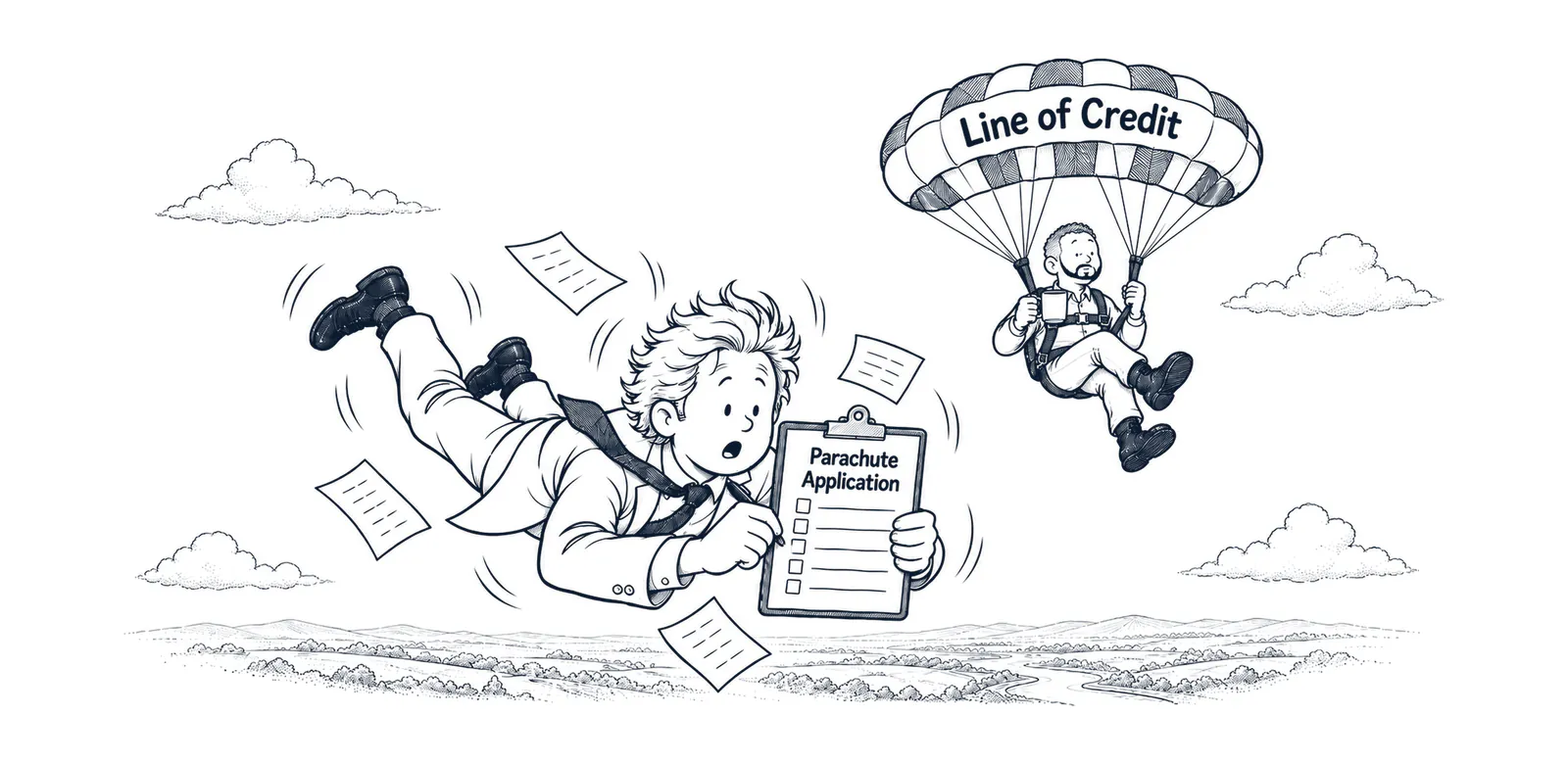
This is why a line of credit, cash reserve, or other working-capital facility should be viewed as financial infrastructure rather than emergency rescue. The ideal time to establish that safety net is when the financial statements are strong, the bank account is healthy, and the business does not urgently need the money.
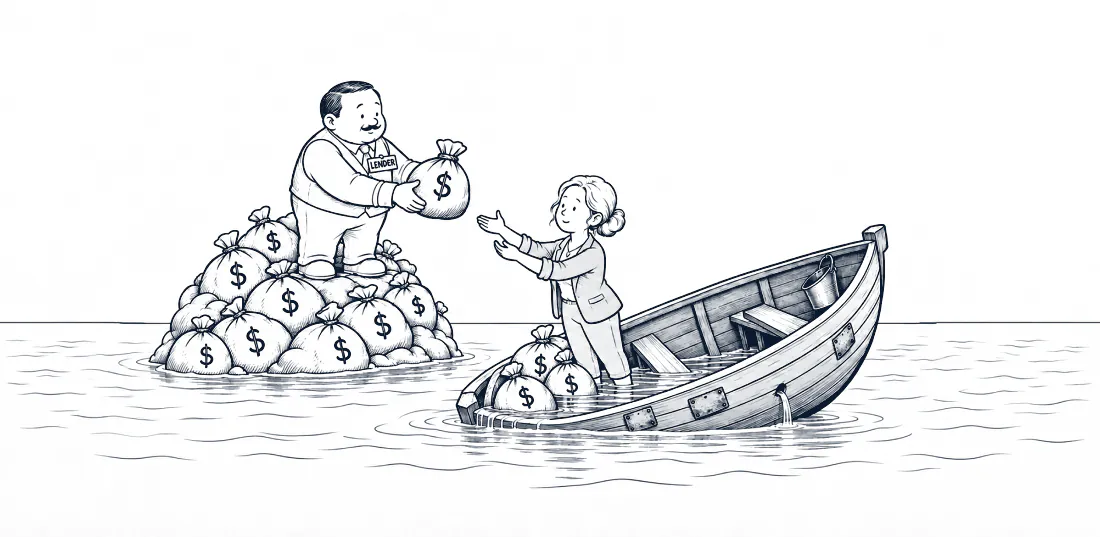
Waiting until the account is nearly empty usually means approaching lenders from the weakest possible position.
Plan Around the Calendar, Not the Crisis
The lesson is not that profitable businesses should avoid financing. The lesson is that financing should be arranged around the operating cycle of the business instead of the date the crisis finally becomes impossible to ignore.
A company can have strong revenue, loyal customers, and healthy annual profits while still being vulnerable to the timing of its cash flow. Recognizing that vulnerability does not make the business weaker. Planning for it makes the business more resilient.
- Profit tells you whether the business model works.
- Cash flow determines whether the business can keep operating while it works.
The companies that understand the difference are usually the ones that have capital available before they are forced to ask for it.