Merchant cash advances probably generate more opinions than any other financing product in commercial lending.
Talk to one person and they’re convinced they’re predatory. Talk to someone else and they’ll tell you they saved their business. After enough years in this industry, I’ve come to a different conclusion. A merchant cash advance isn’t the problem. Using one without a plan is.
Like almost every financial tool, it can be exactly the right solution in one situation and exactly the wrong solution in another. The difference usually isn’t the product itself. It’s whether the business owner understands what that financing is going to do to their cash flow after the money arrives.
That’s the conversation I think happens far too rarely.
The Money Isn’t the Hard Part
When business owners receive funding, the first thing they usually focus on is the amount.
How much was approved? How quickly can it fund? Will it solve today’s problem?
Those are reasonable questions, but they’re only half the conversation. The more important question is what happens tomorrow morning. That’s when the payments begin.
Unlike longer-term financing that may require a single monthly payment, merchant cash advances often collect small amounts from the business every business day. Individually, those withdrawals may not seem overwhelming. Collectively, they permanently change the amount of cash the business has available to operate until the obligation is repaid.
That doesn’t automatically make the product bad. It simply means the business has less room for error every single day.
Every Deposit Is Already Spoken For
One of the biggest mistakes I see is that business owners evaluate financing based on the day the money arrives instead of the months that follow.
The deposit feels like relief. The daily withdrawals feel much different.
Every customer payment that hits the account is already partially committed before the owner decides how to spend it:
- Payroll still has to be met.
- Vendors still need to be paid.
- Inventory still has to be purchased.
- Unexpected expenses still appear.
The business is now trying to accomplish all of those things with less available cash than it had before. That’s the part many owners underestimate. The advance solved one problem. The payment structure created a new operating reality.
The DoorDash Problem
I’ve used this analogy for years because almost everyone understands it.
There’s nothing wrong with ordering DoorDash. Sometimes you’re busy. Sometimes convenience is worth paying for. Sometimes it solves exactly the problem you have that day.
But imagine ordering every meal through DoorDash.
Eventually you stop noticing the convenience and start noticing where all your money went.
Merchant cash advances work the same way. Using one occasionally for the right reason isn’t what creates problems. Relying on them as your normal operating strategy is.
That’s when convenience quietly becomes dependence.
The Treadmill Starts Slowly
I’ve watched this happen more times than I can count.
A business takes an advance to solve a legitimate problem. Maybe receivables are running behind. Maybe equipment failed unexpectedly. Maybe inventory has to be purchased before a busy season begins.
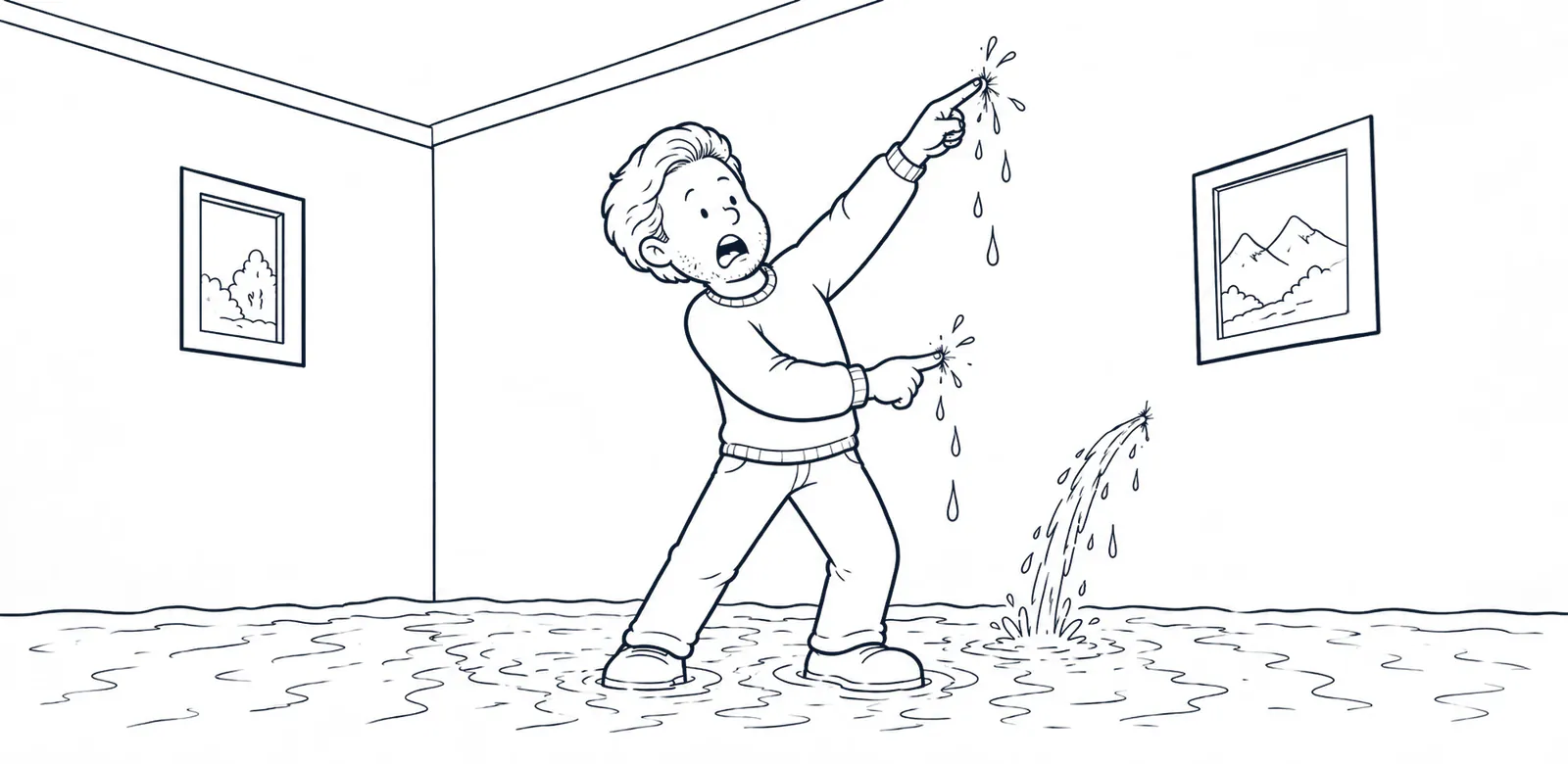
The money solves the immediate issue. A few weeks later another challenge appears, but now part of every day’s revenue is already committed to repayment. Cash flow is tighter than it was before, even if sales haven’t changed.
So the owner takes another advance. Now two daily payments are coming out. Then another unexpected expense appears. Before long, financing isn’t supporting the business anymore. The business is supporting the financing.
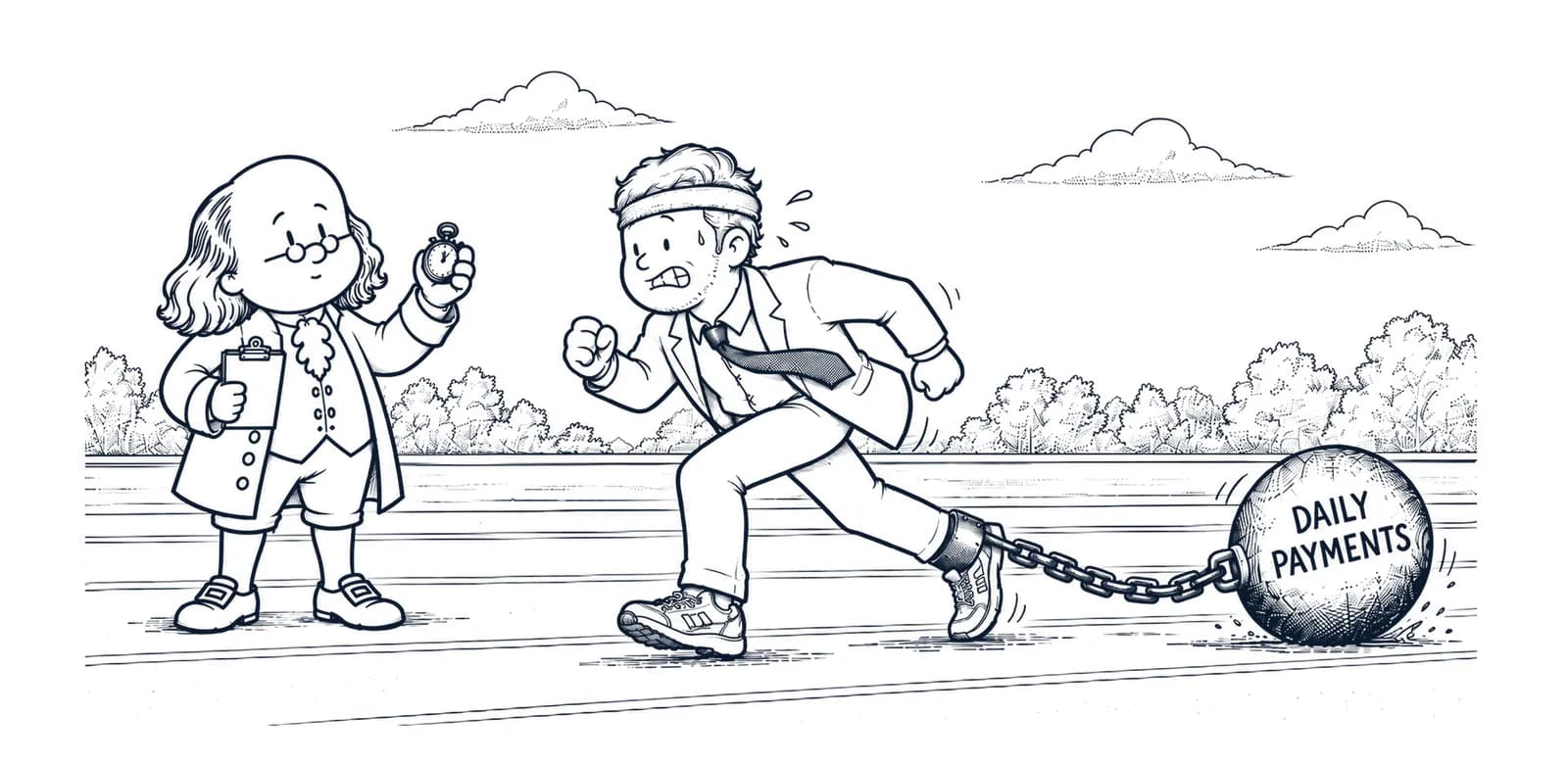
That’s the point where owners begin feeling like they’re running hard every day without getting any farther ahead. It’s a treadmill, and it’s remarkably difficult to step off once several positions are stacked together.
The Payment Is More Important Than the Approval
One thing I’ve learned over the years is that almost everyone asks the wrong question.
They ask, “How much can I get approved for?” I think the better question is, “What payment can my business comfortably support?” Those are completely different conversations.
Just because a lender is willing to advance more money doesn’t necessarily mean borrowing more improves the business. In some cases, taking the maximum approval simply creates a larger daily obligation without creating additional value.
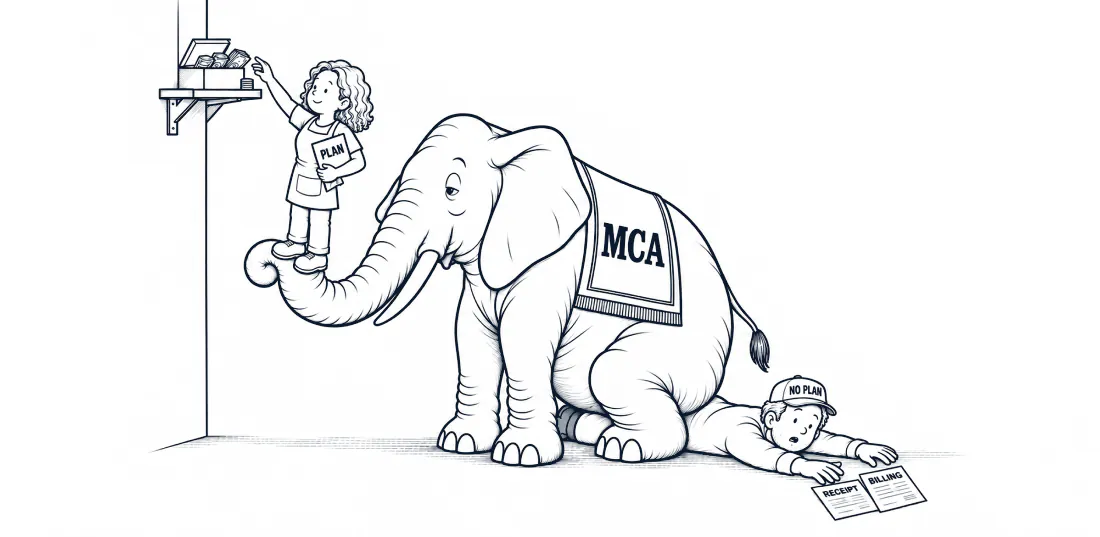
That’s why funding should always begin with a plan. The amount borrowed should be determined by what the business actually needs to accomplish, not by the largest number someone is willing to approve.
When a Merchant Cash Advance Makes Perfect Sense
After reading this far, you might think I don’t like merchant cash advances. That’s not true.
I’ve recommended them many times over the years because there are situations where they’re exactly the right solution. When a business has a short-term opportunity, a temporary cash-flow disruption, or an immediate need that can’t wait weeks for traditional underwriting, speed has real value. Sometimes the cost of missing the opportunity is greater than the cost of the financing itself.
The mistake isn’t using a merchant cash advance. The mistake is expecting it to solve a long-term problem it was never designed to solve.
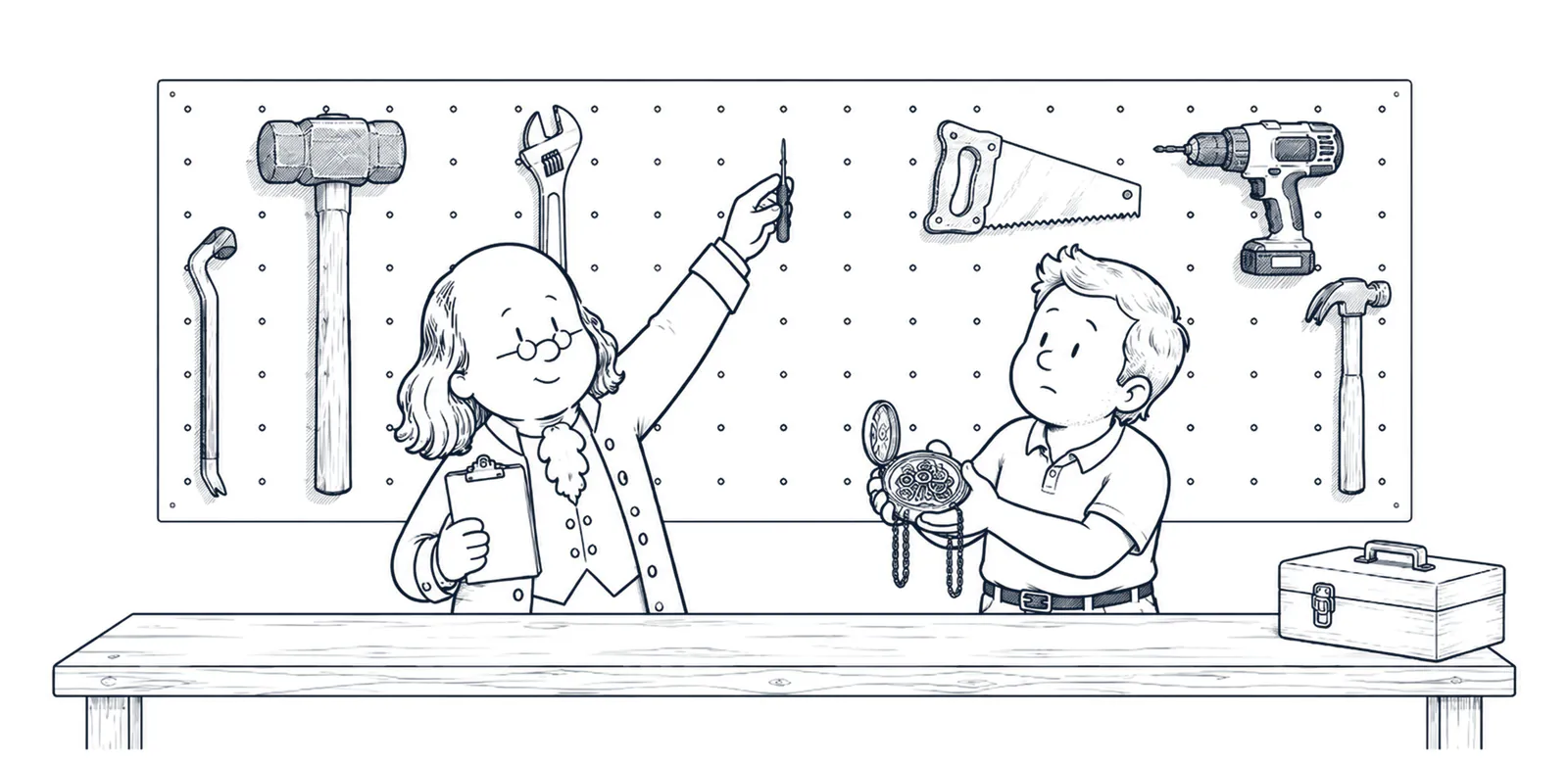
Like any bridge, it only works if you know where you’re going after you cross it.
Spend the Money on Something That Changes the Business
This is one of the conversations I wish happened more often before the funding ever arrives.
If the advance is simply replacing cash that’s already been spent, the business may find itself right back in the same position a few months later. But if the proceeds solve a problem that permanently improves the business, the conversation becomes very different:
- Maybe the money allows the company to purchase equipment that increases production.
- Maybe it finances inventory that supports profitable growth.
- Maybe it allows the business to complete a project that produces recurring revenue.
- Maybe it simply creates enough breathing room to stabilize operations while management fixes the underlying issues affecting cash flow.
In each case, the financing has a purpose beyond getting through this week. That’s what separates borrowing for growth from borrowing for survival.
Every Bridge Should Lead Somewhere Better
One of the phrases I use most often is that every financing decision should improve the next financing decision.
If today’s funding leaves the business stronger, healthier, and more attractive to lenders six months from now, it probably served its purpose well. If today’s funding simply creates another payment that eventually requires another loan, then the business hasn’t really moved forward.
That’s why I encourage owners to think beyond the approval itself:
- Where is this financing supposed to lead?
- What does success look like after the money is gone?
- How does this position the business for something better?
Those questions are often more important than the interest rate or the approval amount because they determine whether financing becomes part of a strategy or simply another reaction.
The Goal Was Never Another Merchant Cash Advance
When I meet with business owners, I almost never hear someone say their long-term goal is to rely on merchant cash advances forever.
Most of them want the same thing:
- They want lower borrowing costs.
- They want more flexibility.
- They want financing they can access before the next emergency instead of because of it.
In other words, they want a business line of credit.
That’s why I think every business should be working toward one, even if it isn’t available today. Stronger financial reporting, healthier cash flow, better banking relationships, and consistent operating performance all move a business closer to that goal. Sometimes a merchant cash advance is one of the steps along that path. It just shouldn’t become the destination.
Sign With Your Exit Strategy Already Planned
Before signing any financing agreement, don’t just ask yourself whether the money solves today’s problem. Ask yourself what happens after the money is spent:
- How will the daily payments affect operating cash flow?
- Will the business still have enough flexibility to handle unexpected expenses?
- What specific improvement is this financing expected to create?
- And perhaps most importantly, what financing product should the business be working toward after this one?
Those questions won’t eliminate every difficult decision. They will usually lead to better ones.
Merchant cash advances aren’t inherently good or bad. They’re simply one tool among many. Used thoughtfully, they can stabilize a business during an important moment and create time to execute a larger plan.
Used without a destination, they often become exactly what business owners hoped they would avoid: another payment, another emergency, another advance.
The goal was never to become good at borrowing. The goal was always to build a business that needed to borrow less often, and on better terms, every time it did.