I’ve lost count of how many business owners have told me, “George, I only needed one advance.”
They never planned to take a second.
Or a third.
Yet a year later they’re managing multiple funding payments, wondering how something that solved an immediate problem became a permanent part of running their business.
That’s what I call the doom loop.
The unfortunate reality is that merchant cash advances aren’t the problem. The problem is what happens when emergency financing quietly becomes a long-term strategy.
Short-Term Money Isn’t the Problem
Merchant cash advances have developed a reputation over the years. Depending on who you ask, they’re either the best thing to happen to small business financing or the worst. The truth, as usual, is somewhere in the middle.
I don’t believe merchant cash advances are inherently good or bad. They’re simply a financial tool. Like any tool, they can solve the right problem, or they can make a bad situation much worse when they’re used incorrectly.
Every business eventually experiences a cash crunch:
- Payroll comes due before receivables arrive.
- Equipment fails.
- Inventory has to be purchased ahead of a busy season.
- Sometimes an opportunity appears that can’t wait three weeks for a bank committee to meet.
That’s exactly the kind of situation short-term financing was designed to solve.
When the Emergency Never Ends
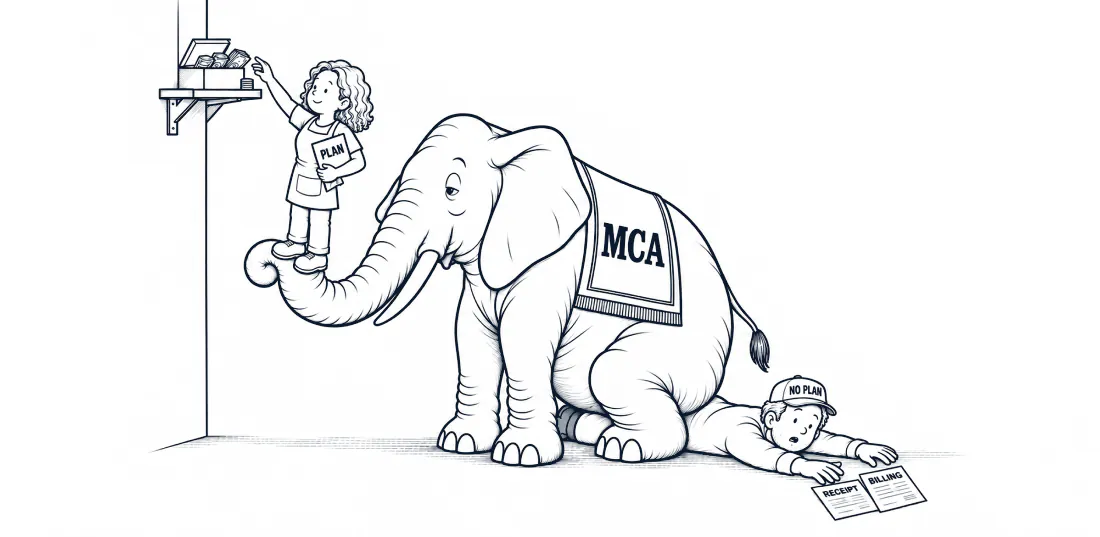
The mistake I see most often isn’t that a business owner accepted a merchant cash advance. It’s that they never had a plan beyond receiving the money.
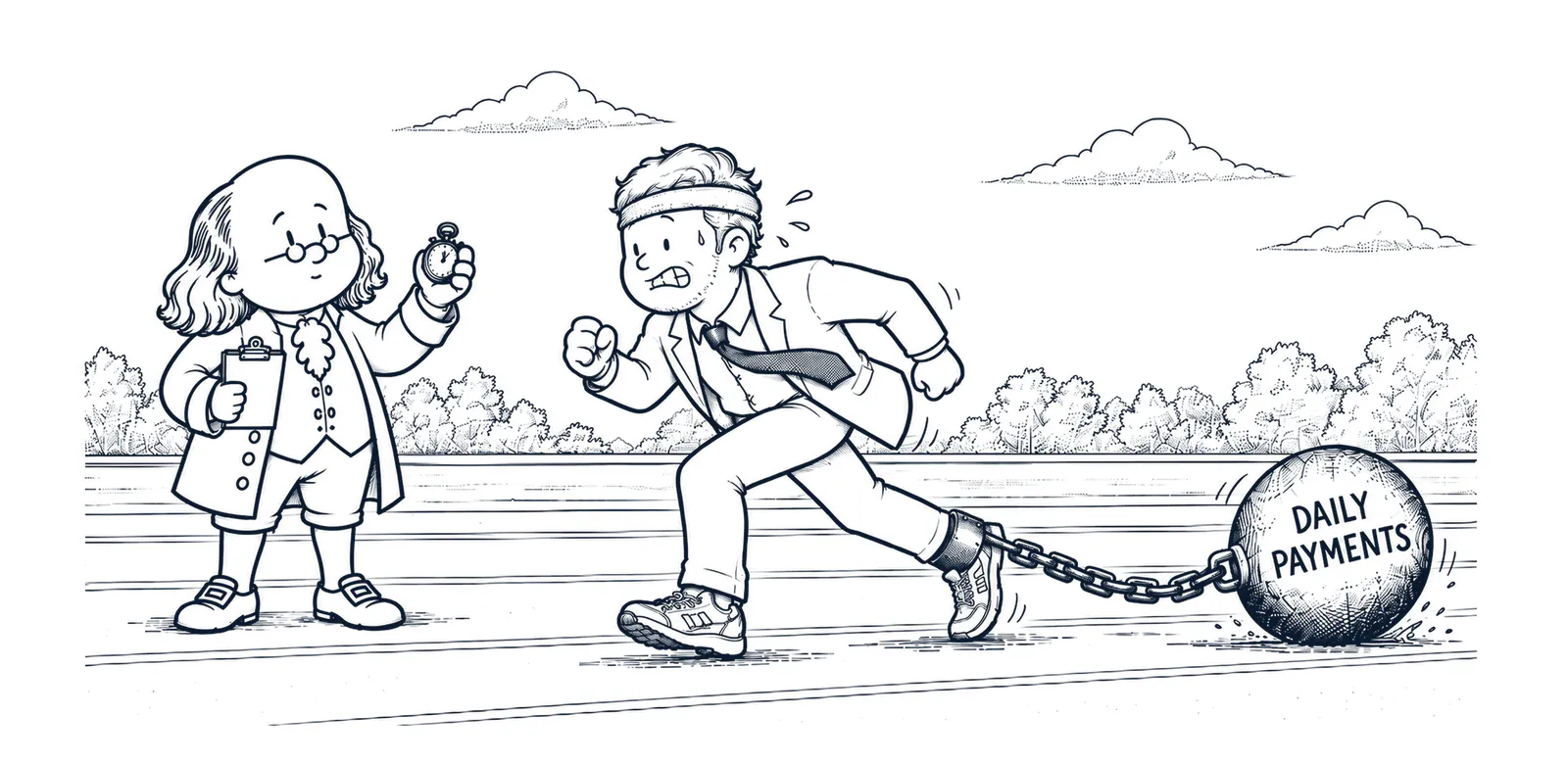
I’ve watched this happen countless times. A business owner takes an advance to solve one immediate problem. The payments begin almost immediately, reducing available cash flow. A few weeks later another expense appears, but now part of every day’s revenue is already committed to the first advance. So they take another one. Then another.
Eventually they’re juggling multiple funding positions, each one solving yesterday’s emergency while making tomorrow’s cash flow even tighter.
At that point, the business usually isn’t borrowing because it’s growing. It’s borrowing because it has no other way to keep up.
The financing didn’t create the problem. The lack of a plan did.
Funding Without a Plan Is Dangerous
I often compare this to ordering dinner.
There’s nothing wrong with using DoorDash when you need it. Sometimes convenience is worth paying for. But if every meal comes from DoorDash, eventually you’ll wonder where all your money went.
Business financing works the same way.
Sometimes speed is exactly what you need. But if every cash flow challenge is solved with another short-term advance, you’re treating the symptom instead of solving the problem.
That’s why I always say that funding without a plan is dangerous.
Sometimes the first loan isn’t intended to solve everything. Sometimes its purpose is simply to stop the bleeding and create enough breathing room to build a better long-term strategy.
Borrow for the Plan, Not the Approval
One of the biggest mistakes I see in this industry is approving business owners for more money than they actually need.
Suppose a company needs $20,000 to solve an immediate problem but qualifies for $35,000. Many brokers celebrate the larger approval because it creates a larger commission.
I look at it differently.
Sometimes borrowing only what’s necessary is the smartest decision. Other times, if additional proceeds genuinely strengthen the company’s cash position while supporting a broader funding strategy, borrowing more may be appropriate.
The important point is that the amount should be determined by the plan, not by the approval.
That’s the difference between arranging financing and providing advice.
Every Bridge Needs an Exit
Our job isn’t simply to find capital. It’s to help business owners improve their financial position over time.
Sometimes that means using short-term financing to stabilize the business today while deliberately working toward a line of credit, a bank term loan, or another product that’s less expensive and more flexible tomorrow. Those better financing options rarely happen by accident. They require stronger financial reporting, healthier cash flow, better banking relationships, and consistent business performance.
Merchant cash advances absolutely have a place in the marketplace. There are situations where they’re the right solution, and situations where they’re the only realistic solution. But they should almost never be viewed as the destination. They should be viewed as a bridge.
Short-term money should buy you time:
- Time to strengthen your business.
- Time to improve your financial position.
- Time to qualify for better financing.
If your short-term financing isn’t leading somewhere better, it isn’t a strategy.
It’s a cycle.